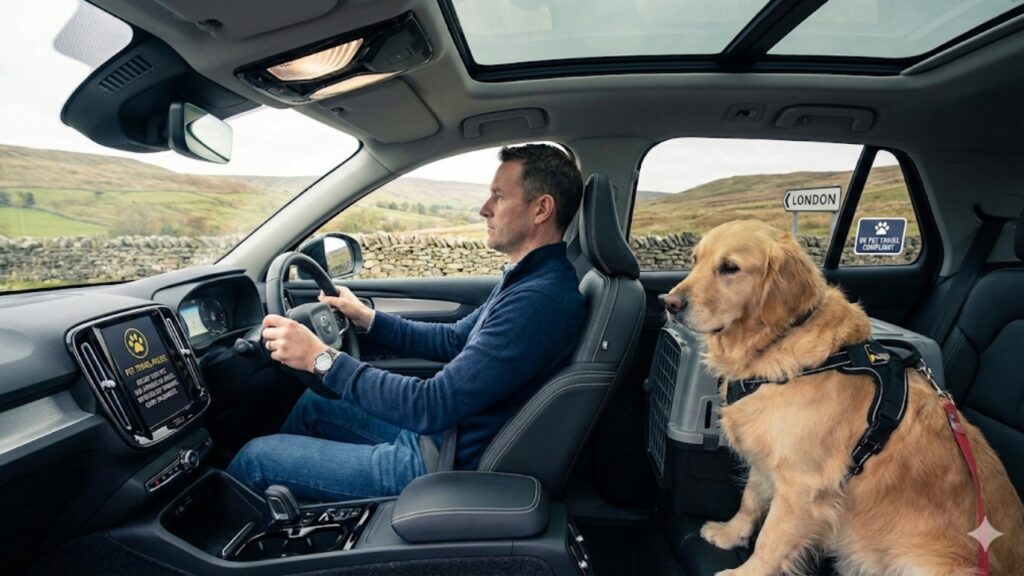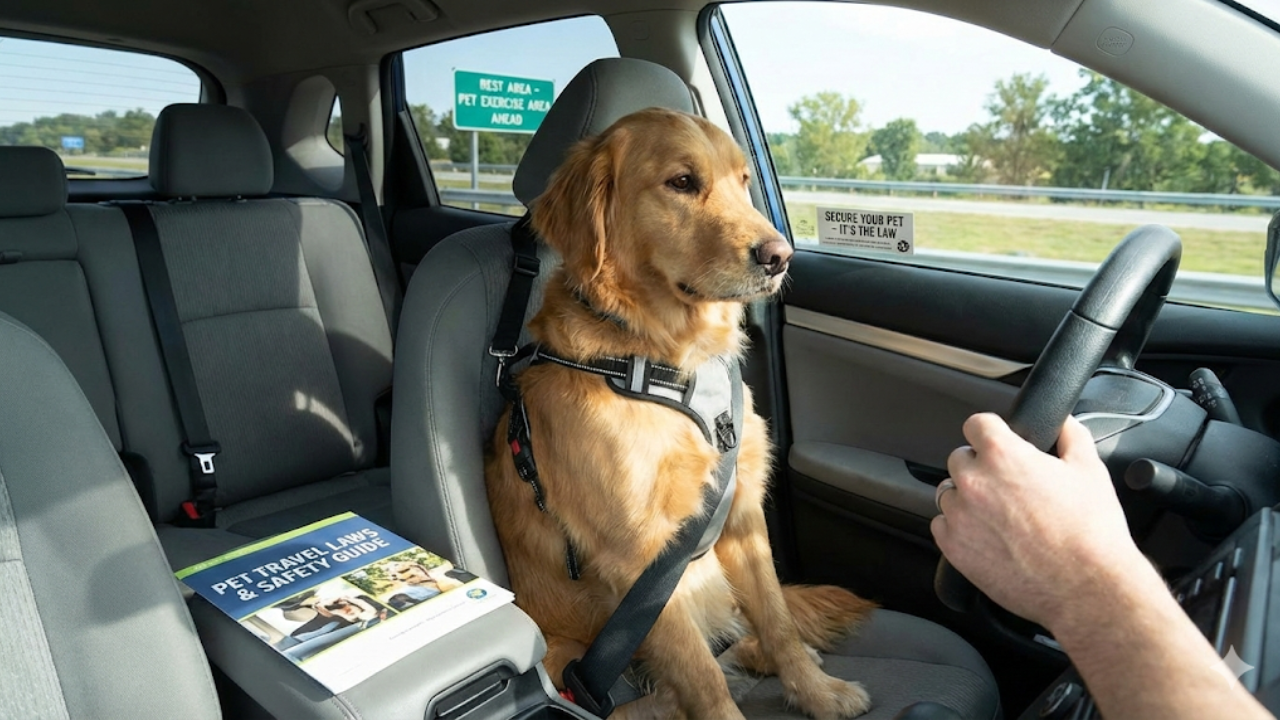
Road trips with your furry companion can create unforgettable memories, but safety and legal compliance come first. Knowing the rules ensures you avoid fines and keep your dog secure during every journey. This guide breaks down essential laws, practical tips, and state-specific details for worry-free travel.
Why Restraints Matter for Safety
Properly securing your dog prevents distractions that could lead to accidents. An unrestrained pet might jump around, block your view, or cause sudden stops to worsen. Experts recommend harnesses, crates, or seatbelt attachments designed for pets to mimic human safety standards. These measures not only protect your dog from flying out in a crash but also shield passengers from injury.
Vehicle laws often tie into distracted driving regulations across many regions. In places like the United States, unrestrained dogs can trigger tickets under broader safety codes. Always test restraints before long drives to ensure comfort and firmness without restricting breathing.
Federal Guidelines and General Rules
No overarching federal mandate exists in the U.S. for dog car travel, leaving most rules to states and localities. However, the U.S. Department of Transportation emphasizes preventing pets from interfering with driving. Animal welfare acts prohibit cruel transport, which includes leaving dogs unsecured in extreme heat or unsecured positions. Internationally, countries like the UK require dogs to be restrained under the Highway Code to avoid fines up to £5,000.
In Canada, similar principles apply through provincial distracted driving laws. Pet owners must ensure animals stay in place, often via crates or barriers. Always carry vaccination records and ID tags, as stops might involve checks.
State-by-State Restraint Requirements
Laws vary widely, with some states enforcing strict rules while others rely on general safety statutes. The table below highlights key U.S. states with specific dog restraint mandates, focusing on passenger compartments and truck beds.
| State | Passenger Compartment Rule | Truck Bed Rule | Fine Range |
|---|---|---|---|
| New Jersey | Must use harness, carrier, or restraint | Prohibited unless secured | $250–$1,000 |
| Hawaii | Restrained to prevent falling or jumping | Cross-tethered or crated | Varies locally |
| Massachusetts | Harness or carrier to avoid driver distraction | Secured to prevent injury | Up to $100 |
| Minnesota | Secured against escape and for safety | Cross-tethered or kennel | $50–$300 |
| California | Distracted driving applies; restraint advised | Crated or cross-tethered | $100+ |
| Washington | Enclosed or protected from ejection | Prohibited unless secured | $250 |
| Oregon | General safety; truck-specific rules | Cross-tethered or high sides | $100–$500 |
This overview draws from common 2025-2026 updates; truck bed transport faces the toughest scrutiny nationwide.
Truck Bed and Open Vehicle Restrictions
Transporting dogs in pickup truck beds draws heavy regulation due to ejection risks. States like Maine, New Hampshire, and Arizona demand cross-tethering or crates to stop falls. Exceptions exist for hunting or farm dogs actively working, but recreational trips rarely qualify. Open vehicles like convertibles fall under similar protections in places such as Connecticut.
Penalties escalate for repeat offenses, sometimes classifying them as animal cruelty. Opt for enclosed trailers if frequent hauling is necessary, as they bypass many open-bed bans.
Heat and Weather Protection Laws
Summer drives pose deadly risks from hot cars, illegal in all 50 U.S. states with felony charges possible for fatalities. Laws ban leaving pets unattended in vehicles above safe temperatures, often around 70°F interior. Rhode Island and Vermont pioneered “hot car” statutes extending to pets.
Winter rules are less formal but tie into cruelty prevention—never leave dogs exposed to freezing winds without shelter. Hydration breaks every two hours keep everyone comfortable.
International Travel Considerations
Crossing borders amplifies complexity. In the European Union, pets must wear seatbelts or crates per directive 1/152/EC. Australia’s states mirror U.S. variations, with New South Wales fining $400 for unsecured dogs. India lacks nationwide car-specific pet laws but enforces PCA Act 1960 against cruelty, including unsafe transport.
Airports and ferries add microchip and health certificate needs. Plan routes avoiding restricted zones.
Preparation Tips Before Hitting the Road
Pack a pet first-aid kit, water bowls, and shaded stops. Acclimate your dog to the car with short practices. Consult vets for sedatives if anxiety persists, avoiding human meds.
Update microchips and licenses. Apps tracking pet-friendly hotels streamline stops.
Common Mistakes to Avoid
Overlooking local ordinances tops the list—cities like Chicago mandate restraints beyond state law. Skipping breaks leads to dehydration. Never tie dogs to external parts; it’s hazardous and often banned.
Stay vigilant for updates, as laws evolve with safety data.
FAQs
Q: Do all U.S. states require dog seatbelts?
A: No, only a few like New Jersey mandate them; others use general safety rules.
Q: Is truck bed travel ever legal?
A: Yes, with secure tethers or crates in most regulated states.
Q: What if my dog dislikes crates?
A: Train gradually with harnesses as alternatives where permitted.
Disclaimer
The content is intended for informational purposes only. You can check official sources; our aim is to provide accurate information to all users.