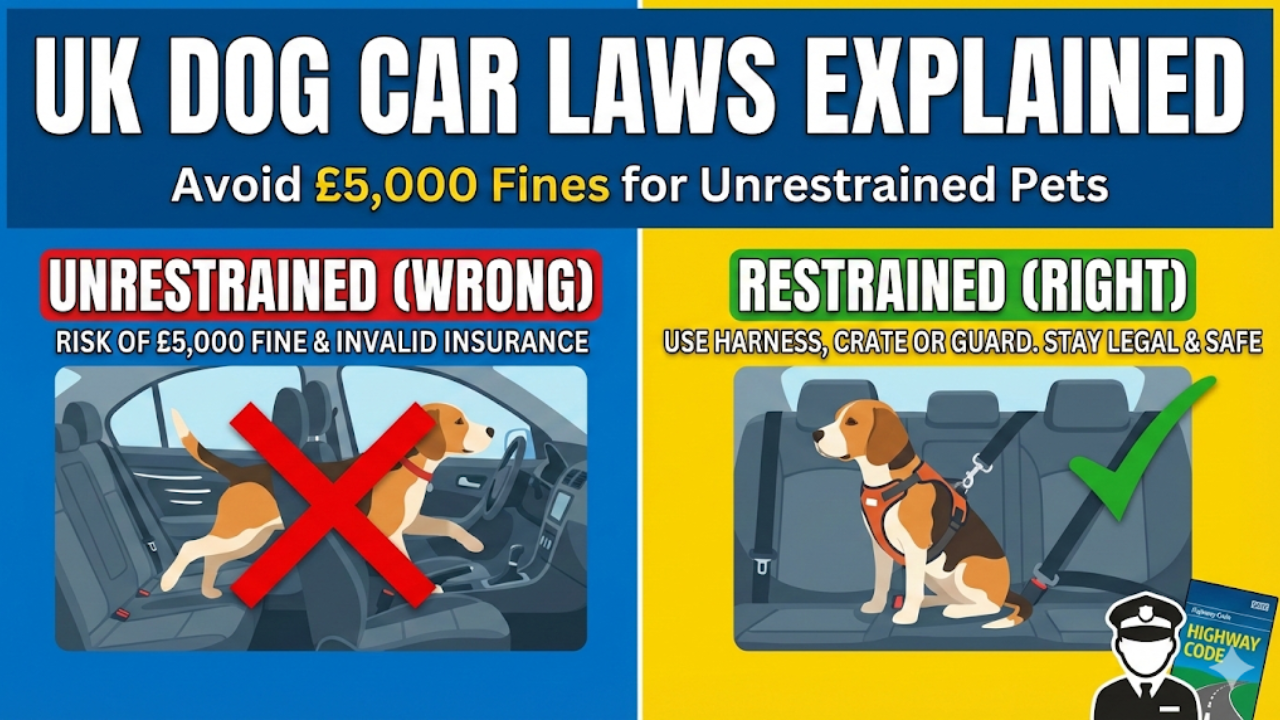
UK drivers love taking their dogs on road trips, but many unknowingly break the law by letting pets roam free in vehicles. Rule 57 of the Highway Code makes it clear that animals must stay secure to prevent distractions or injuries during sudden stops. Failing to follow this can lead to serious penalties, including fines up to £5,000 for careless driving.
Core Legal Requirement
The Highway Code’s Rule 57 states that dogs and other animals need suitable restraints in cars so they do not distract drivers or cause harm in emergencies. This rule applies to all vehicles, from family hatchbacks to vans, and covers every journey length. Police enforce it under broader offenses like driving without due care, which carries unlimited fines in court.
Potential Penalties
Unrestrained dogs can result in charges of careless driving, with fines reaching £5,000 and up to nine penalty points on your license. New drivers risk losing their license entirely if points accumulate early. Insurers may also void policies if an accident involves a loose pet, leaving you liable for all costs.
Approved Restraint Methods
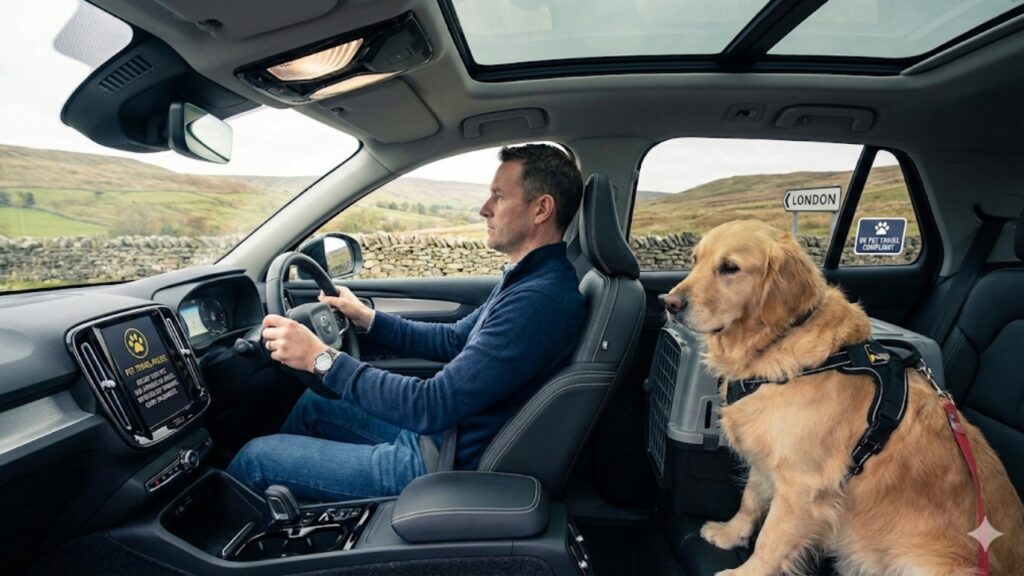
Choose from seat belt harnesses, pet carriers, dog cages, or boot guards to comply with the law. These options keep dogs in place without restricting airflow or comfort on long drives. Avoid makeshift solutions like tying a lead to the headrest, as they fail safety tests and offer no real protection.
Safety Data Overview
Real-world data shows why restraints matter. Studies reveal unrestrained dogs become projectiles in crashes, multiplying injury risks for everyone inside. Here’s a quick comparison of common methods:
| Restraint Type | Crash-Tested? | Max Fine Risk if Faulty | Comfort Level |
|---|---|---|---|
| Seat Belt Harness | Often (e.g., FMVSS 213 adapted) | High (£5,000) | High |
| Pet Carrier/Cage | Yes if secured | Medium | Medium |
| Boot Guard | Generally | Low if proper fit | High for large dogs |
| Free Roam (Illegal) | No | High (£5,000) | Dangerous |
This table highlights how proper gear slashes dangers while meeting legal standards.
Choosing the Right Gear
Match restraints to your dog’s size and breed for best results. Crash-tested harnesses like those meeting ECE R-17 standards excel for front or back seats, while guards suit estates with spacious boots. Always check for secure fittings before setting off, and test your dog’s reaction on short trips first.
Common Mistakes to Dodge
Many owners let dogs sit on laps or wander the footwell, inviting instant police stops. Hot weather traps are another pitfall—never leave pets alone in parked cars, as temperatures soar rapidly. Regular vet checks ensure your dog handles travel without stress, reducing distraction chances.
Extra Travel Tips
Plan stops every two hours for walks and water to keep dogs calm. Secure loose items that might tempt chewing, and use calming aids if your pet gets anxious. For vans or larger vehicles, boot barriers provide the safest space without cramping passengers.
Insurance and Long-Term Advice
Notify your insurer about regular dog passengers to avoid claim denials. Investing in quality, certified gear pays off by protecting your furry friend and your wallet from escalating fines. Stay updated via official Highway Code sources, as rules evolve with safety research.
FAQs
Q: Is a collar and lead enough?
A: No, it must be a full harness or cage—collars risk choking.
Q: What if my dog is in the boot?
A: Use a guard or barrier to prevent forward jumps.
Q: Do fines apply to short trips?
A: Yes, Rule 57 covers all drives.