The global gold market experienced a significant bullish reversal on February 13, 2026, as investors reacted to a cooling inflation landscape in the United States. After a volatile week that saw the precious metal dip below key psychological support levels, the release of the January Consumer Price Index (CPI) provided the necessary spark for a price surge. Spot gold jumped by more than 2%, reclaiming the $5,000 per ounce milestone and reigniting discussions regarding the Federal Reserve’s next monetary policy moves. This recovery highlights gold’s enduring sensitivity to inflationary data and its primary role as a hedge against currency devaluation and economic uncertainty.
Understanding the Impact of Softer Inflation
The primary driver behind this sudden rally was the US Labor Department’s report, which showed the Consumer Price Index rose by only 0.2% in January. This figure came in below the market’s expectation of a 0.3% increase, signaling that the aggressive inflationary pressures of the previous year may finally be moderating. For gold investors, “softer” inflation is a double-edged sword that currently leans toward the positive. While high inflation typically drives gold demand, the expectation that cooling prices will force the Federal Reserve to cut interest rates is a much stronger catalyst. Because gold is a non-yielding asset, its opportunity cost decreases significantly when interest rates fall, making it far more attractive to institutional and retail buyers alike.
Federal Reserve Policy and Market Sentiment
Market participants are now recalibrating their expectations for the Fed’s trajectory in 2026. Prior to the inflation report, robust employment data had led many to believe that interest rates would remain “higher for longer.” However, the sub-par CPI reading has shifted the narrative. Financial markets are currently pricing in a high probability of at least two rate cuts this year, with some analysts suggesting the first could arrive as early as June or July. This shift in sentiment has put downward pressure on the US Dollar and Treasury yields, creating a perfect environment for gold to flourish. As the dollar weakens, gold becomes cheaper for international buyers, further fueling the upward momentum.
Key Market Indicators: Gold and Silver (Feb 2026)
| Asset Class | Current Price (Spot) | 24-Hour Change | Weekly Trend |
| Spot Gold (XAU) | $5,030.45 / oz | +2.25% | Recovering |
| US Gold Futures | $5,050.80 / oz | +2.00% | Bullish |
| Spot Silver (XAG) | $76.88 / oz | +2.29% | Volatile |
| Platinum | $2,059.90 / oz | +3.00% | Neutral |
Technical Levels and Price Targets
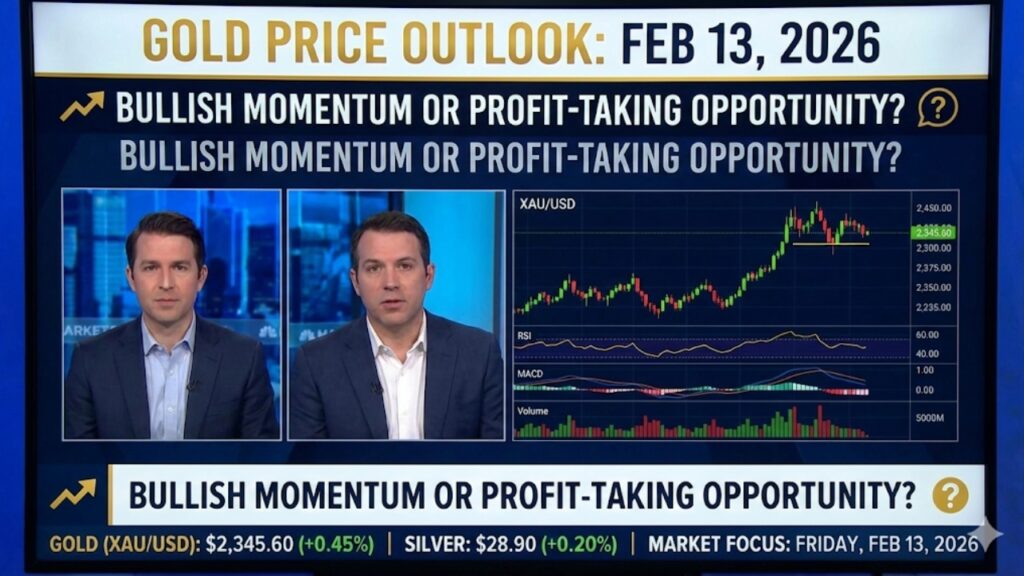
From a technical perspective, gold’s ability to bounce back from its weekly low of $4,915 is a vital sign of market resilience. Analysts had identified the $4,850 to $5,100 range as a critical consolidation zone. By reclaiming the $5,000 level, gold has preserved its broader bullish structure. The next major resistance sits near $5,200, and a sustained break above this point could open the door for a retest of the all-time highs seen earlier in the year. Conversely, strong buying interest remains evident in the $4,500 to $4,700 support band, which acted as a floor during the speculative sell-offs in early February.
Global Demand and Physical Markets
Beyond the macro-economic data from the West, physical demand in Asia continues to provide a solid floor for prices. In China, demand has remained exceptionally strong as consumers head into the Lunar New Year celebrations, traditionally a peak period for gold gift-giving and investment. Meanwhile, in India, the market has seen a shift toward “dip-buying,” where local investors take advantage of price corrections to bolster their holdings. Central banks also remain active participants; many emerging economies continue to diversify their reserves away from the US Dollar, viewing gold as a strategic anchor in a world of geopolitical instability and rising national debts.
The Role of Silver and Other Metals
Silver has mirrored gold’s movements but with its characteristic higher volatility. After a dramatic crash earlier in the month caused by margin requirement hikes and speculative liquidations, silver rebounded by over 2% alongside gold. Industrial demand for silver remains a long-term bullish factor, particularly in sectors like AI-related hardware and solar energy. While silver is often traded for short-term gains, its structural deficit—marking its sixth consecutive year where demand outstrips supply—suggests that any major dip is viewed as a significant entry point for long-term investors.
Looking Ahead to the Remainder of Q1
As we move further into the first quarter of 2026, the focus will remain squarely on the Federal Reserve’s communication. The upcoming release of the FOMC meeting minutes will be scrutinized for any hints of a dovish tilt. While the path to $6,000 per ounce is still speculative and depends on a sustained decline in real yields, the consensus among major financial institutions remains optimistic. Gold has proven that even after “parabolic” moves and sharp corrections, its fundamental drivers—geopolitical tension, central bank buying, and the eventual pivot in interest rate policy—remain firmly in place.
FAQs
Q1. Why did gold prices rise after the inflation report?
Gold prices rose because inflation was lower than expected, which increases the likelihood that the Federal Reserve will cut interest rates. Lower rates make gold more attractive compared to interest-bearing assets like bonds.
Q2. Is $5,000 a sustainable price for gold?
Many analysts believe $5,000 is a key psychological level. As long as gold stays above its support level of $4,950, the long-term trend remains bullish, supported by central bank purchases and global uncertainty.
Q3. How does the US Dollar affect gold prices?
Gold is generally priced in US Dollars. When the dollar weakens due to soft economic data or lower interest rate expectations, gold becomes cheaper for investors using other currencies, which typically drives the price higher.
Disclaimer
The content is intended for informational purposes only. you can check the officially sources our aim is to provide accurate information to all users