The gold market has entered a historic phase in 2026, characterized by unprecedented price levels and a shift in how institutional investors view the yellow metal. Recently, gold prices witnessed a sharp 1.2% intraday recovery, rebounding to approximately $4,980 per ounce. This movement comes on the heels of a volatile week where the metal briefly dipped below its psychological support level, only to find immediate buying interest. As the global economy grapples with shifting interest rate expectations and persistent geopolitical friction, the question for many is no longer if gold will rise, but how high the ceiling truly sits.
Understanding the 1.2% Price Surge
The recent 1.2% climb in gold prices is primarily a reaction to cooling U.S. inflation data and a subsequent softening of the U.S. dollar. When the Consumer Price Index (CPI) shows signs of moderating, market participants begin to price in more aggressive interest rate cuts from the Federal Reserve. Since gold is a non-yielding asset, lower interest rates reduce the “opportunity cost” of holding it compared to dividend-paying stocks or interest-bearing bonds. Furthermore, a weaker dollar makes gold cheaper for international buyers, sparking a wave of demand from major consuming nations in Asia.
Central Bank Accumulation as a Structural Floor
One of the most significant drivers of the 2026 gold rally is the relentless accumulation by global central banks. For the first time in decades, gold has surpassed U.S. Treasuries as a preferred reserve asset for several emerging economies. These institutions are moving away from dollar-denominated assets to insulate themselves from potential financial sanctions and currency debasement. In 2026, central bank demand is projected to reach approximately 800 tonnes, which accounts for nearly 25% of annual mine output. This “official sector” buying provides a massive structural floor, preventing deep price corrections even during periods of market stability.
The Road to $5,000: A Psychological Milestone
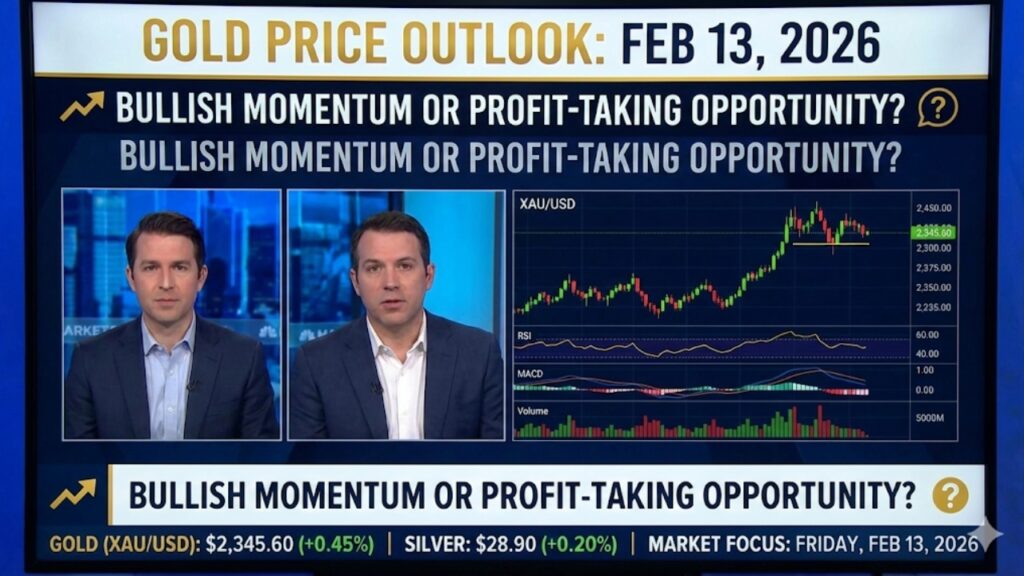
As of February 2026, gold is trading within a hair’s breadth of the $5,000 mark. Analysts suggest that breaking this barrier is more a matter of “when” rather than “if.” The $5,000 level represents a critical psychological resistance zone; once breached, it could trigger a “gamma squeeze” or a wave of automated buying from institutional algorithms. Technical indicators, including the Fibonacci extension levels, suggest that the current price action is forming a “bull flag” pattern, which typically precedes another leg up in a sustained bull market.
Comparative Gold Market Data (2025-2026 Forecast)
| Period/Metric | Average Gold Price (USD/oz) | Central Bank Demand (Tonnes) | Primary Driver |
| Q1 2025 | $2,650 | 210 | Geopolitical Tensions |
| Q3 2025 | $4,100 | 230 | US Dollar Weakness |
| Q1 2026 (Actual) | $5,065 | 240 | Inflation Hedging |
| Q4 2026 (Est.) | $5,400 – $5,800 | 260 | Interest Rate Cuts |
Is $6,000 Per Ounce a Realistic Target?
While $5,000 seems imminent, the prospect of $6,000 gold by the end of 2026 is gaining traction among major financial institutions. Bank of America and Wells Fargo have recently revised their targets upward, citing a “perfect storm” of rising sovereign debt and supply-side constraints. Gold mining production has remained relatively stagnant, increasing by less than 1% annually, while investment demand through ETFs has surged. If global debt-to-GDP ratios continue to climb and real interest rates remain in negative territory, $6,000 could transition from a “bull case” scenario to a baseline reality.
Geopolitical Risks and Safe-Haven Demand
Beyond monetary policy, the 2026 outlook is heavily influenced by the “fragmentation” of global trade. Ongoing conflicts in Eastern Europe and the Middle East, combined with trade tariff uncertainties, have cemented gold’s status as the ultimate safe-haven. Investors use gold as a form of “financial insurance” against systemic shocks. In an era where digital assets and traditional currencies face high volatility, the physical permanence of gold offers a unique sense of security that continues to attract both retail and institutional capital.
Investment Strategy: Navigating Volatility
For the average investor, the current environment suggests a “buy on dips” strategy. Market experts point out that while the long-term trend is undeniably bullish, the path to $6,000 will not be a straight line. Periodic profit-taking and margin calls in other asset classes, like equities or crypto, can occasionally force “liquidation selling” in gold. However, these corrections are typically short-lived. By maintaining a diversified portfolio with a 5-10% allocation to precious metals, investors can hedge against the unpredictability of the 2026 fiscal landscape.
Final Outlook for the Year
The 2026 gold market is being redefined by a transition from speculative trading to structural ownership. The combination of central bank de-dollarization, physical supply deficits, and a shifting Federal Reserve policy creates a robust environment for precious metals. Whether the price settles at $5,200 or pushes toward the ambitious $6,000 mark, gold remains the cornerstone of wealth preservation in an increasingly uncertain world.
FAQs
Q1. Why did gold prices rise by exactly 1.2% recently?
The 1.2% increase was a technical rebound after gold hit a one-week low. It was sparked by softer-than-expected U.S. inflation data, which led investors to anticipate earlier interest rate cuts by the Federal Reserve.
Q2. Can gold really hit $6,000 in 2026?
Yes, several major banks like Bank of America and CIBC have raised their forecasts to the $6,000 range. This is based on the combination of record central bank buying, stagnant mine supply, and rising global debt.
Q3. Is it too late to invest in gold at current prices?
Most analysts suggest a “buy on dips” approach. While prices are at historic highs, the structural drivers (like central bank demand) suggest that the long-term bull market remains intact, making corrections a potential entry point.
Disclaimer
The content is intended for informational purposes only. you can check the officially sources our aim is to provide accurate information to all users