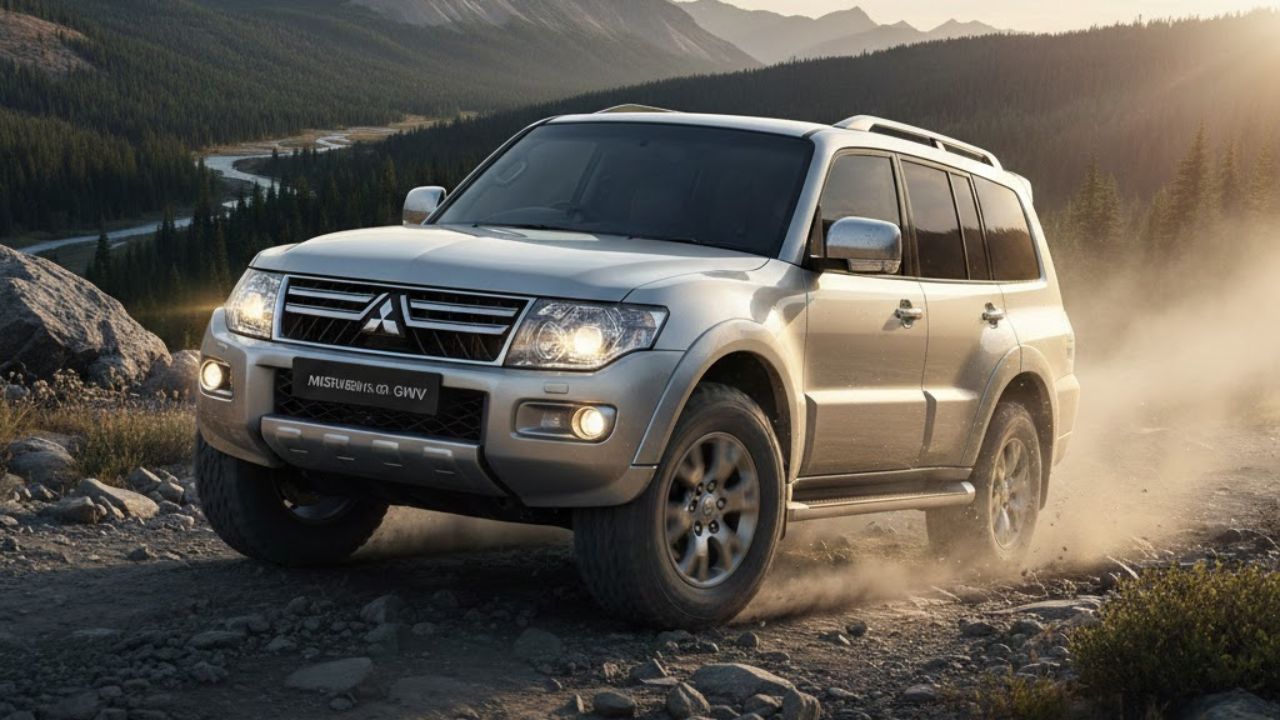
The Mitsubishi Shogun, known internationally as the Pajero or Montero, remains a titan in the world of full-sized SUVs. While many modern SUVs have transitioned into “soft-roaders” built on car-like chassis, the Shogun has stubbornly—and successfully—clung to its rugged roots. It is a vehicle designed for those who view a road as a suggestion rather than a requirement. Its reputation is built on a foundation of Dakar Rally victories and decades of proven reliability in the most inhospitable climates on earth. For the modern buyer, it represents a blend of old-school mechanical toughness and surprisingly sophisticated four-wheel-drive technology that keeps it competitive even against newer, more expensive rivals.
Unrivaled Off-Road Engineering
What truly sets the Shogun apart is its legendary Super Select II 4WD system. Unlike many systems that force you to choose between fuel economy and traction, this setup allows drivers to shift between 2WD and 4WD at speeds of up to 100km/h. For serious mud-plugging or rock crawling, the vehicle features a locked center differential and a low-range transfer case that provides immense torque at low speeds. With impressive approach and departure angles, and a wading depth that rivals specialized military vehicles, the Shogun is a mountain goat in a tuxedo. Whether you are navigating a flooded rural lane or a steep mountain pass, the chassis is engineered to flex and grip where others would simply spin their tires.
Engine Options and Real-World Performance
Throughout its production, the Shogun has been powered by a variety of powerplants, but the standout remains the 3.2-liter DI-D (Direct Injection Diesel) four-cylinder engine. This unit is the workhorse of the range, favored for its immense low-end grunt which is essential for both towing and off-roading. In later models, this engine was refined to produce around 190bhp and a staggering 441Nm of torque. While it may lack the whisper-quiet refinement of a modern German luxury SUV, it offers a sense of indestructible longevity. For those seeking smoother power delivery, V6 petrol options exist in certain markets, but for the majority of buyers, the diesel’s balance of fuel efficiency and pulling power makes it the logical choice.
Comparison of Popular Shogun Generations
| Feature | 3rd Gen (V60) | 4th Gen (V80) | Final Edition (UK) |
| Engine Type | 3.2L DI-D / 3.5L V6 | 3.2L DI-D | 3.2L DI-D (High Output) |
| Towing Capacity | 2,800kg – 3,300kg | 3,500kg | 3,500kg |
| Common Gearbox | 5-Speed Manual/Auto | 5-Speed INVECS-II | 5-Speed Automatic |
| Best For | Budget Adventurers | Family Towing | Collectors / Heavy Duty |
Interior Comfort and Versatility
Step inside, and you’ll find a cabin designed with ergonomics and durability in mind. The Shogun typically offers a seven-seat configuration, with the “Hide & Seat” third row that folds completely flat into the floor, providing a massive cargo area. The seating position is famously “commanding,” giving the driver a clear view over traffic and obstacles alike. While the infotainment systems in older models can feel a bit dated compared to 2026 standards, the build quality is impeccable. Soft-touch materials are placed where you need them, but the hard-wearing plastics used elsewhere ensure the interior can withstand the abuse of muddy boots, pets, and heavy gear without showing immediate wear and tear.
The Buying Guide: What to Look For
When hunting for a pre-owned Shogun, service history is your best friend. These vehicles are often used for heavy towing or serious off-roading, which can put strain on the suspension and drivetrain. Check the underside for heavy scraping or “rock rash,” which indicates a life spent on trails. Pay close attention to the 4WD selector; ensure it moves smoothly between all modes (2H, 4H, 4HLC, 4LLC) without the dashboard lights flashing excessively. The 3.2L diesel engine is generally bulletproof, but listen for any rattling from the timing chain on high-mileage examples. A well-maintained Shogun can easily cruise past the 200,000-mile mark, making it one of the best value-for-money propositions on the used market.
Towing and Utility Capabilities
The Shogun is a favorite among the equestrian and caravanning communities for a reason: its 3,500kg braked towing capacity. This puts it in the elite tier of utility vehicles. Its heavy kerb weight provides a stable platform, meaning the “tail rarely wags the dog” when pulling a large horsebox or a twin-axle caravan. Furthermore, the inclusion of Stability and Traction Control (ASTC) helps manage the vehicle’s composure during sudden maneuvers. If your lifestyle involves moving heavy loads across varying terrain, there are very few vehicles that offer this level of capability without moving into the much more expensive territory of the Toyota Land Cruiser.
Final Verdict on a Motoring Icon
The Mitsubishi Shogun is not a vehicle for everyone. If you prioritize soft suspension and the latest touchscreen gadgets for city driving, you might find it a bit agricultural. However, if you value mechanical honesty, go-anywhere capability, and a vehicle that feels like it was built to last a lifetime, the Shogun is peerless. It represents the end of an era of “proper” 4x4s—over-engineered, incredibly tough, and deeply reliable. It remains a definitive choice for explorers, farmers, and families who need a vehicle that works as hard as they do, regardless of the weather or the terrain.
FAQs
Q1 Is the Mitsubishi Shogun expensive to maintain?
Generally, no. While parts can be more expensive than a standard hatchback, the Shogun is incredibly reliable. Regular oil changes and chassis greasing prevent most major issues.
Q2 What is the real-world fuel economy of the 3.2 DI-D?
You can expect between 25 and 32 MPG depending on the load and driving style. It is not a fuel-sipper, but it is competitive for a vehicle of its size and weight.
Q3 Can the Shogun be used as a daily family car?
Yes. Its high safety rating, spacious interior, and excellent visibility make it a practical family vehicle, though its large size can make tight city parking a bit of a challenge.
Disclaimer
The content is intended for informational purposes only. You can check the official sources; our aim is to provide accurate information to all users.